A Birdwatcher’s Guide to the Border Ranges Rainforest
Sine Cera Rainforest Retreat · Cougal NSW · sinecera.org.au
Aerial/forest canopy shot of Sine Cera or Gradys Creek area
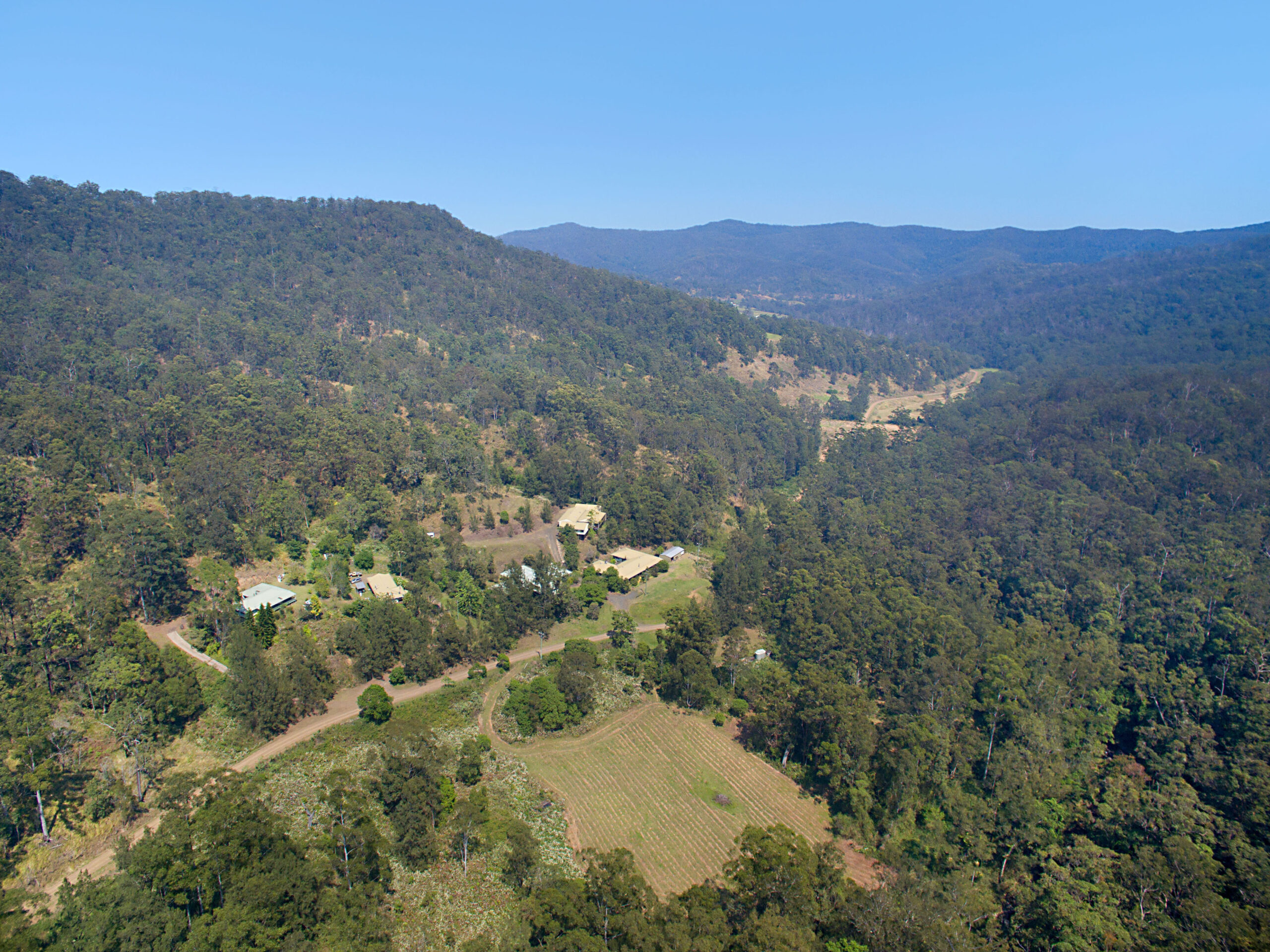
Where Rainforest Meets the Border Ranges
Step outside at Sine Cera Rainforest Retreat and within minutes, the sounds will find you. A deep, haunting melody drifts up from the gully. Something whistles back from the canopy. A pair of vivid wings flashes between the fig trees. You don’t need to be an experienced birdwatcher to feel the magic — you just need to be here.
Situated at Cougal in northern NSW, Sine Cera sits on the doorstep of the Border Ranges National Park, part of the UNESCO World Heritage-listed Gondwana Rainforests of Australia. This region holds the highest concentration of bird, marsupial, snake and frog species in all of Australia — and it shows.
Whether you’re an enthusiastic ‘twitcher’ with a life list to fill, or simply a curious guest who’d love to know what’s singing outside the window, here are five remarkable native birds you might encounter during your stay.
1. Albert’s Lyrebird (Menura alberti)
 The rarest songbird in Australia — and it might be just down the gully
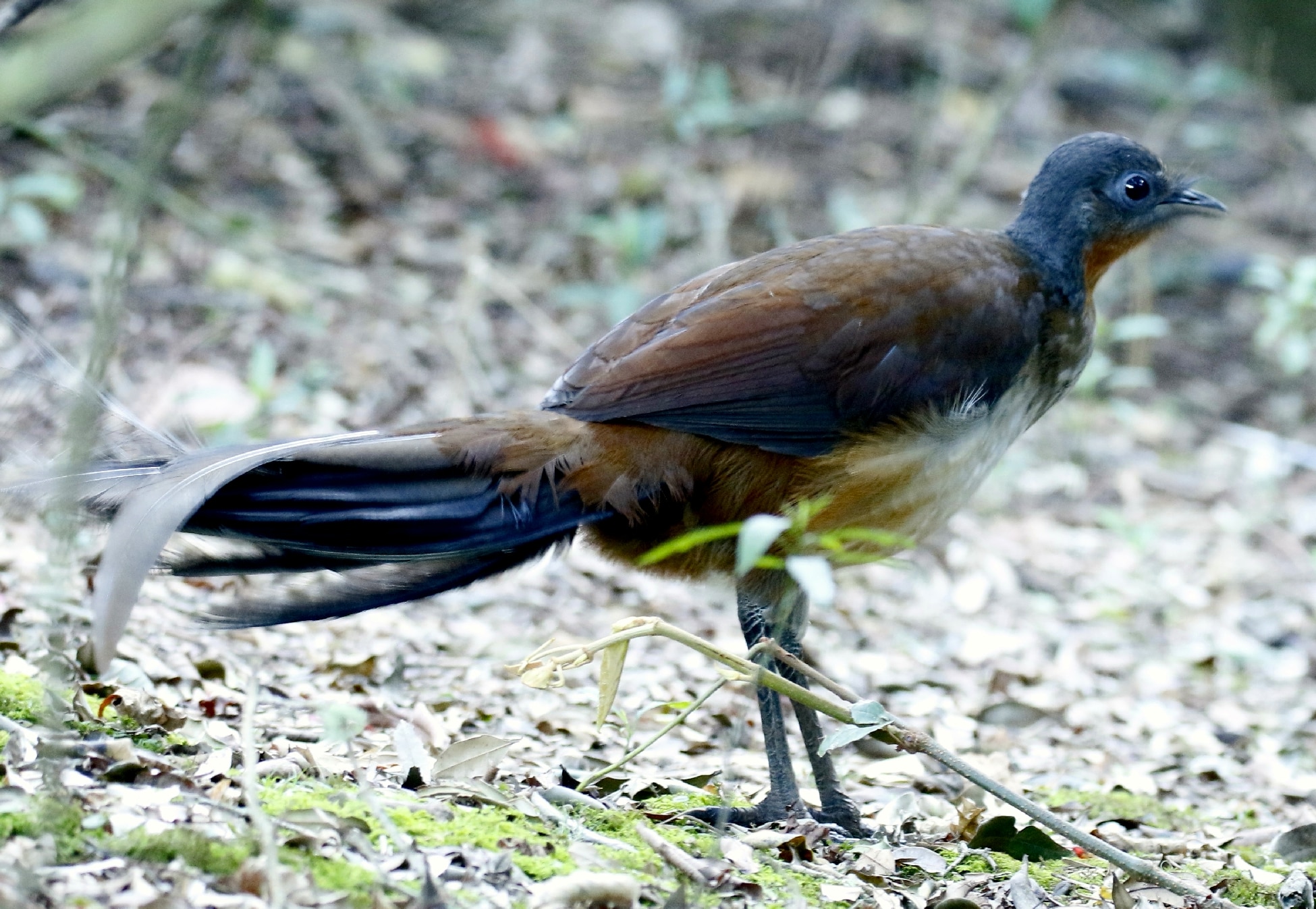
Albert’s Lyrebird in the rainforest undergrowth | Source: WikiMedia Commons
If you hear what sounds like an entire forest singing at once — whipbirds, rosellas, catbirds and more — it could well be just one bird: the Albert’s Lyrebird. One of the world’s most extraordinary mimics, the male Albert’s Lyrebird can weave the calls of up to 20 other species into long, unbroken passages of song.
What makes spotting one here so special is how rare this opportunity truly is. The Albert’s Lyrebird exists only in a narrow belt of subtropical rainforest straddling the NSW-Queensland border — and the Border Ranges is one of its last strongholds. With a total wild population estimated at just 3,500 breeding birds, hearing (let alone seeing) one is a genuine privilege.
Look for them foraging in leaf litter along the creek gullies at dusk, or listen for the song drifting up through dense forest on still mornings. They’re more often heard than seen, but that song is unforgettable.
Best time to spot: Winter months (June–August) when males sing most actively during breeding season
Look for: Gully areas with dense vine undergrowth and deep leaf litter near Gradys Creek
Listen for: Complex, melodic passages that switch suddenly between deep resonance and high trills
2. Regent Bowerbird (Sericulus chrysocephalus)
 Australia’s most dazzling decorator — the male is pure Instagram gold
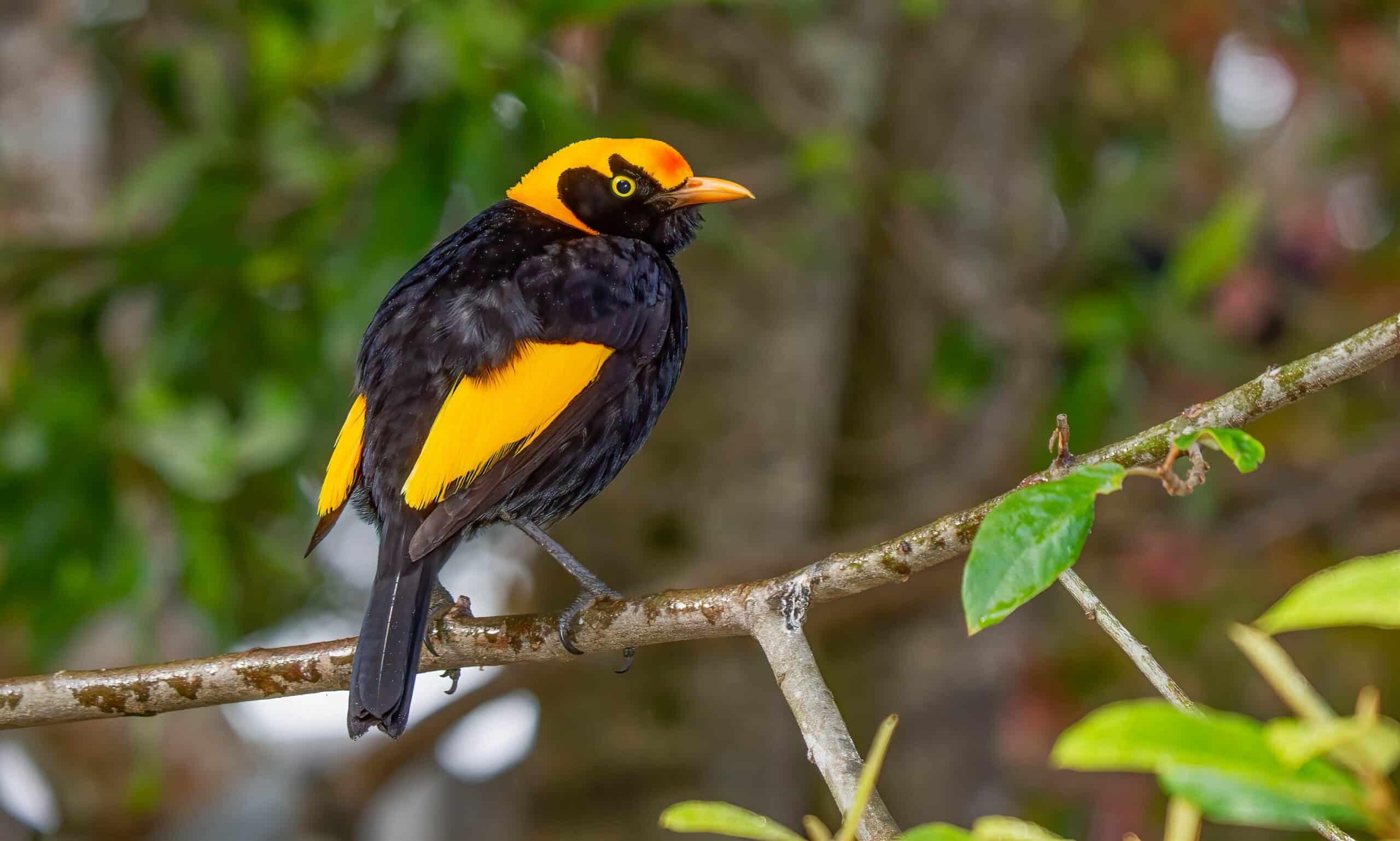
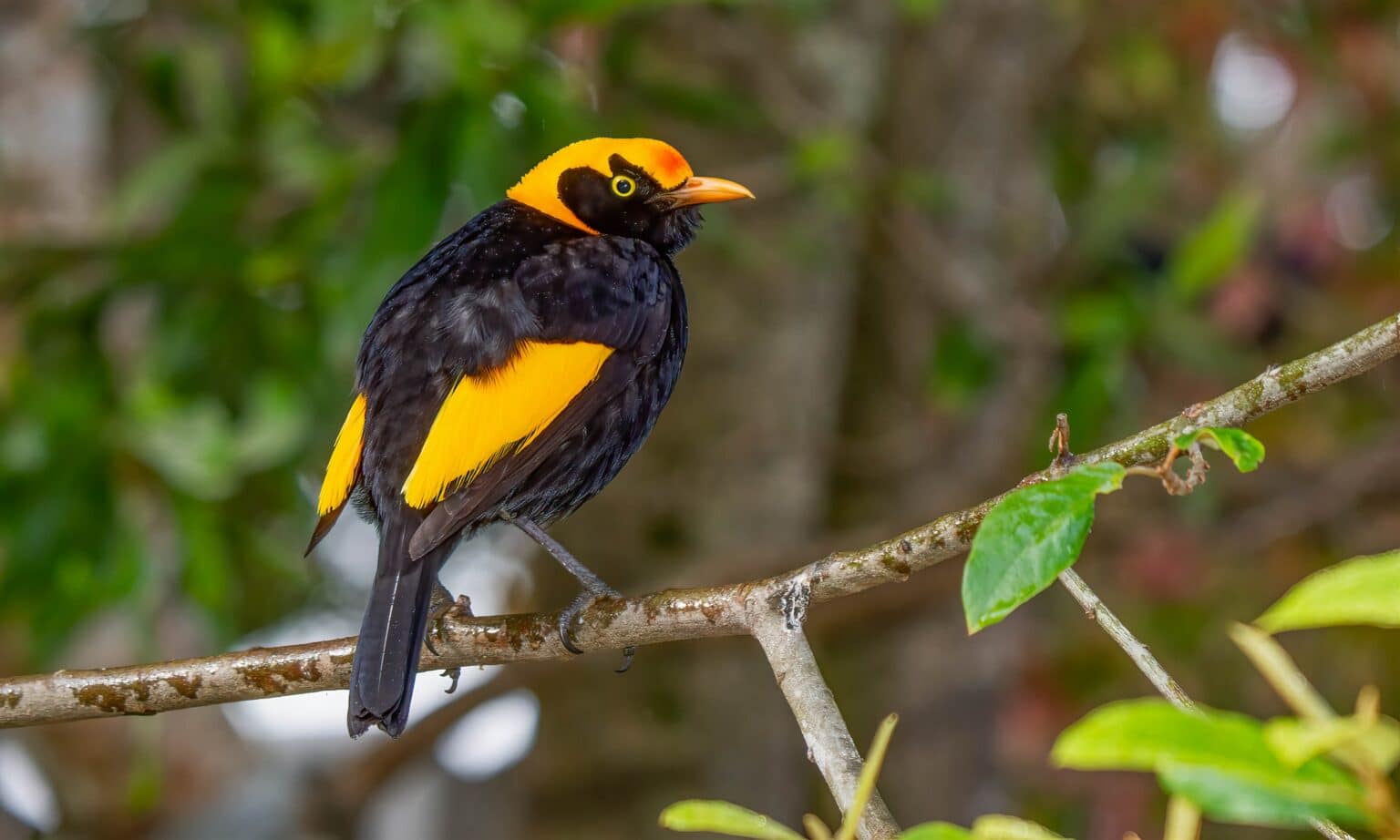
Bowerbird showing gold and black plumage | Source: WikiMedia Commons
Few birds anywhere in the world can match the male Regent Bowerbird for sheer visual drama. Glossy jet black with a blazing gold crown, mantle and wings, the male looks like something an art director invented. The female, by contrast, is subtly marked in brown and cream — a clever disguise while nesting.
But the Regent Bowerbird’s real talent lies in architecture. The male constructs an elaborate bower — a stick avenue decorated with berries, shells and coloured objects — purely to impress females. Unlike some bowerbird species, he doesn’t build a towering structure; instead his bower is a neatly arranged platform. What he lacks in height, he makes up for in performance, painting the interior walls of the bower with a mixture of plant material and saliva.
The forests and rainforest edges around Sine Cera provide ideal habitat for this species. Keep an eye out near fruiting trees where small groups sometimes feed, particularly during autumn and winter.
Best time to spot: Autumn through winter; look in fruiting trees and rainforest edges
Look for: A flash of black-and-gold in the mid-canopy, or groups of mottled brown females feeding
Tip: Bring binoculars — the plumage detail in sunlight is spectacular
3. Paradise Riflebird (Ptiloris paradiseus)
 Australia’s bird of paradise — the male puts on one of nature’s greatest shows
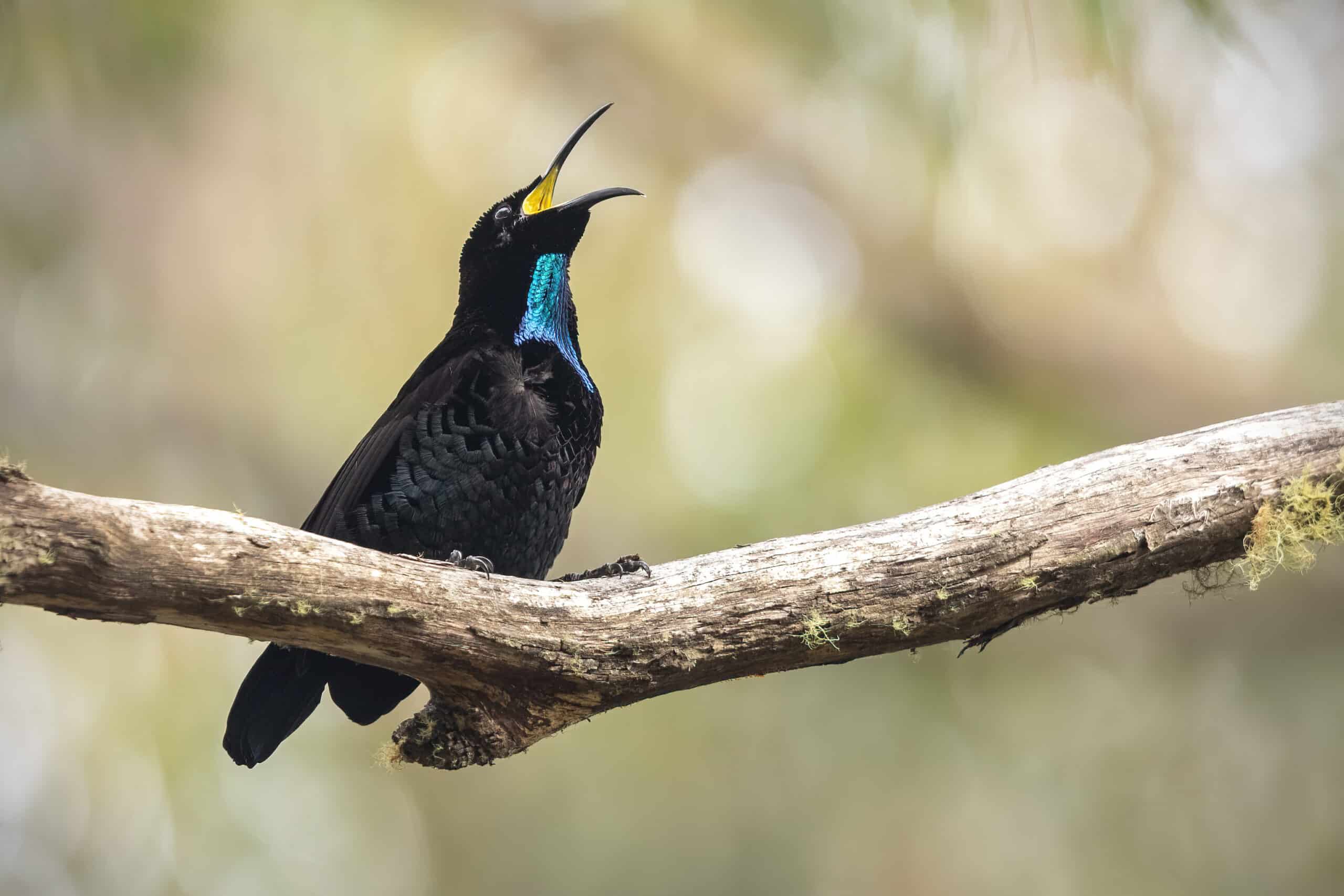
Paradise Riflebird | Source: WikiMedia Commons
Australia has its own bird of paradise, and the Paradise Riflebird is it. The male is clothed in velvety black with an iridescent green-blue throat and breast that catches the light like oil on water. But it’s the courtship display that stops people in their tracks.
Perched on an exposed branch or stump, the male spreads his wings into a perfect symmetrical arc — framing his shimmering throat in a show designed entirely to dazzle a watching female. He bobs, sways and calls in a long, rasping ‘yaas’ that carries through the forest. It’s one of the most theatrical performances in the animal kingdom.
The Border Ranges National Park is specifically noted as a prime location for this species. At Sine Cera, you stand a real chance of finding a displaying male in the taller sections of forest, particularly on sunny mornings when males are most active.
Best time to spot: Spring and early summer (September–December) during peak display season
Look for: High, exposed perches — dead tree stumps or bare branches where males display
Listen for: A loud, harsh ‘yaas’ call — distinctive and once heard, never forgotten
4. Wompoo Fruit-Dove (Ptilinopus magnificus)
 The most spectacularly coloured pigeon you’ll ever see
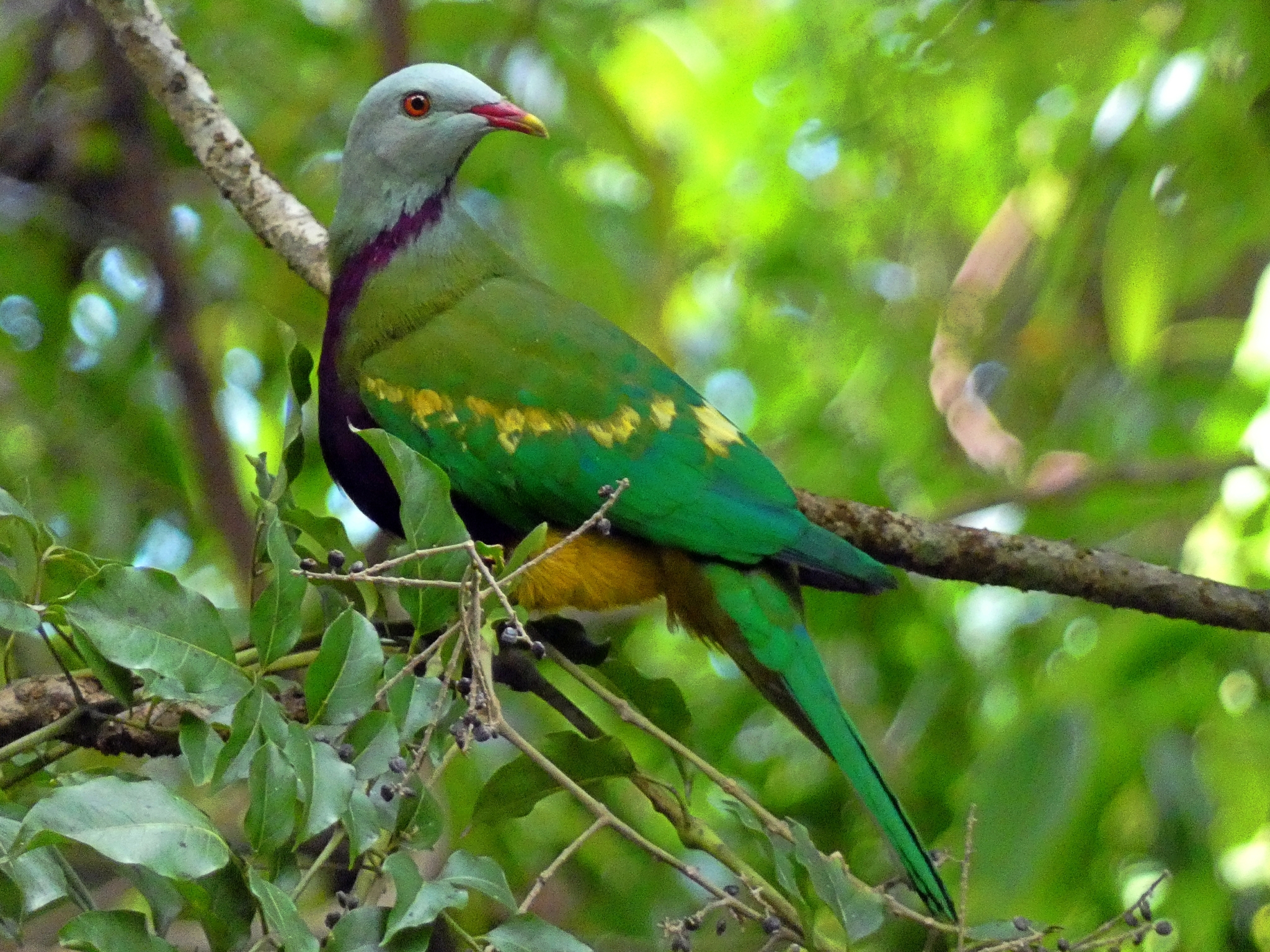
Wompoo Fruit-Dove in the canopy | Source: WikiMedia Commons
It’s name comes from its call — a deep, resonant ‘wom-poo’ that echoes through the canopy and is often the first sign that this extraordinary bird is somewhere above you. The Wompoo Fruit-Dove is the largest of Australia’s fruit-doves, and it is gloriously coloured: a deep purple chest, bright yellow-and-green wings, and a grey-green head that seems to glow in filtered forest light.
Despite being the size of a small chicken and painted in brilliant colours, the Wompoo is surprisingly hard to spot. It forages quietly high in the canopy for native figs and rainforest fruits, and its colours actually provide camouflage against the dappled light of the forest ceiling.
The species is listed as vulnerable in NSW, making every sighting at Sine Cera a meaningful one. The retention of fruiting rainforest trees is critical to their survival — another reason why protecting this landscape matters.
Best time to spot: Year-round, but most active in early morning when feeding
Look for: Movement in the upper canopy of tall rainforest — watch for fig and laurel trees
Listen for: The deep, low ‘wom-poo’ call — slow and resonant, unlike any other bird
5. Green Catbird (Ailuroedus crassirostris)
 The forest bird that sounds uncannily like a cat in distress
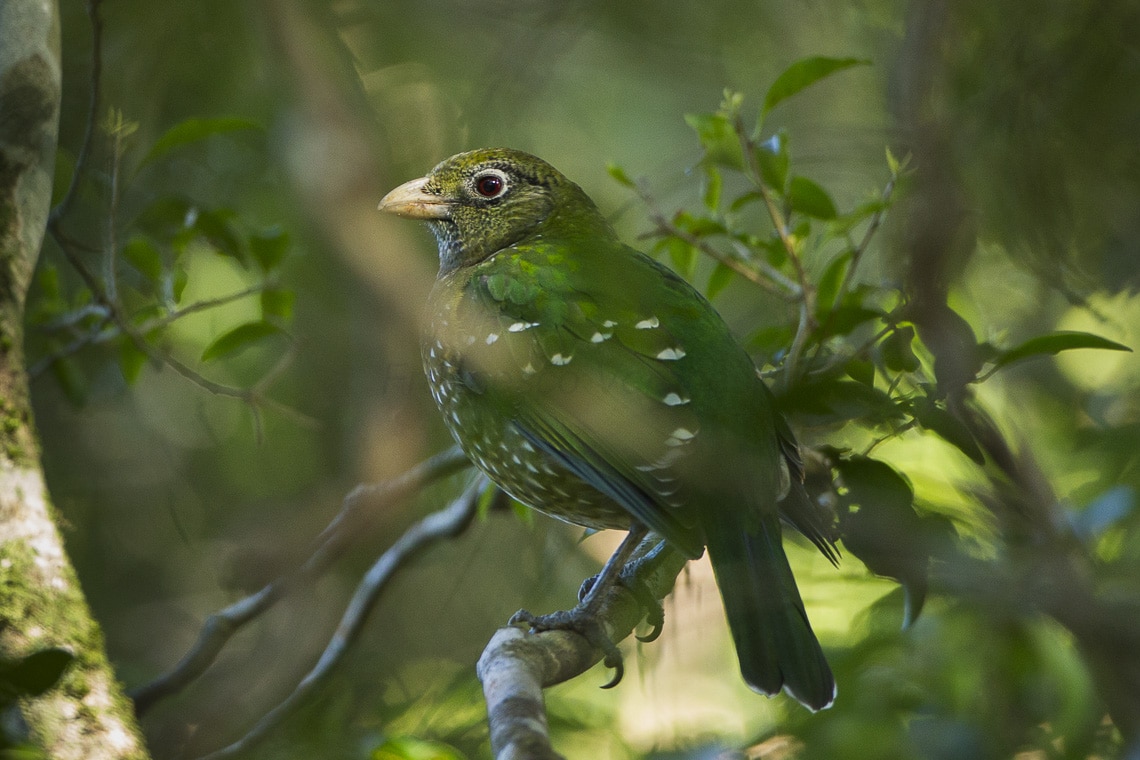
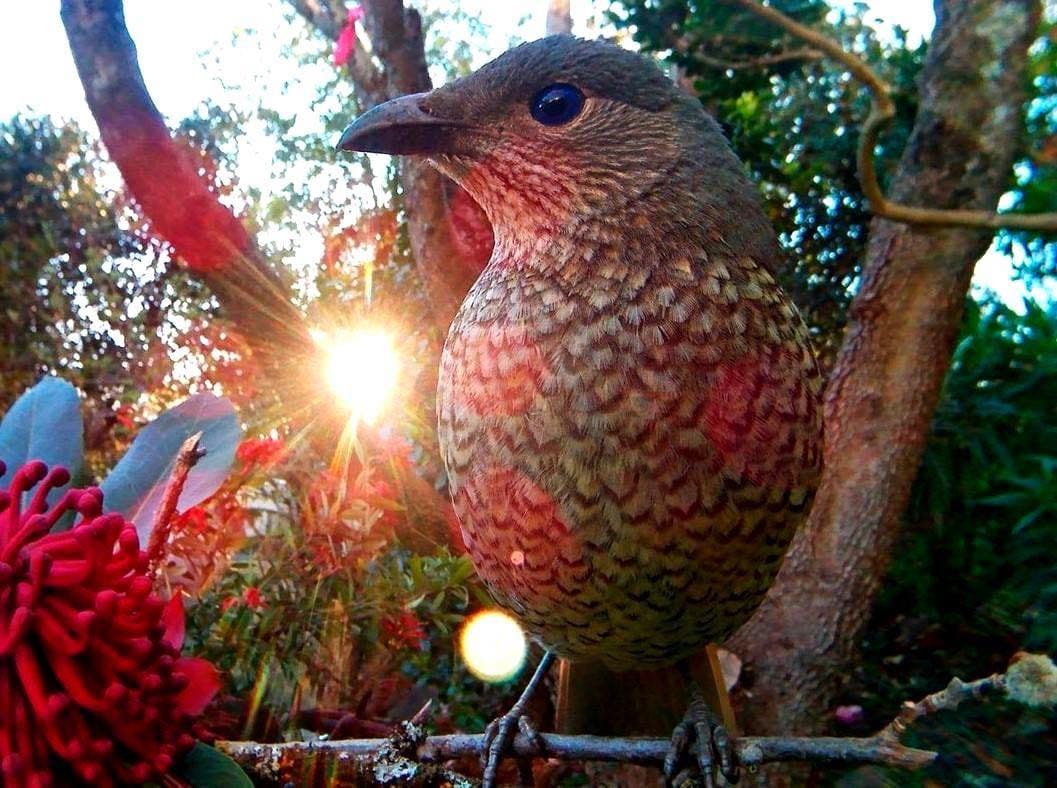
Green Catbird perched in rainforest foliage showing green plumage and white-spotted wings | Source: WikiMedia Commons
Hear a plaintive, wailing meow drifting from the rainforest and don’t worry — nothing is hurt. That’s the Green Catbird, named for a call so convincingly feline that it has startled many a first-time visitor into checking on a non-existent cat.
The Green Catbird is a large, robust bird dressed in rich apple-green plumage with white-spotted wings and a powerful pale bill. A relative of the bowerbirds, it shares that family’s intelligence and curiosity. Unlike its bowerbird cousins, however, the male Green Catbird doesn’t build a bower to attract a mate — he relies instead on his bizarre vocal performance and the offering of food gifts.
Unlike many rainforest birds, the Green Catbird is monogamous, and pairs tend to stay together for life. Listen for their calls around the denser, wetter gullies at Sine Cera, and look in mid-level foliage where they often forage for fruit, insects and small animals.
Best time to spot: Year-round — one of the more reliably present species in this habitat
Look for: Mid-canopy fruit trees; listen for the catlike wail followed by harsher notes
Fun fact: The Albert’s Lyrebird frequently mimics the Green Catbird — so if you hear a ‘cat’, it might actually be a lyrebird!
Tips for Birdwatching at Sine Cera
You don’t need to be an expert to enjoy the birds here. A few simple habits will dramatically improve your experience:
- Get up at dawn. The first hour after sunrise is when birdsong peaks — step outside with a cup of tea and simply listen.
- Move slowly and quietly. Sudden movements cause birds to flush. Walk gently and stop often.
- Download the Merlin app (by Cornell Lab). Point your phone at a sound and it identifies the bird — free, and remarkable.
- Focus on the gullies. The creek lines and wetter gullies around Sine Cera concentrate wildlife — especially lyrebirds.
- Pack binoculars. Even a basic pair transforms the experience when birds are high in the canopy.